
AI voice agent vs basic phone assistant: the structural difference between answering and executing
Learn the difference between an enterprise AI voice agent and a basic phone assistant. Streamline operations and eliminate manual data entry with Helia.
July 8, 2026
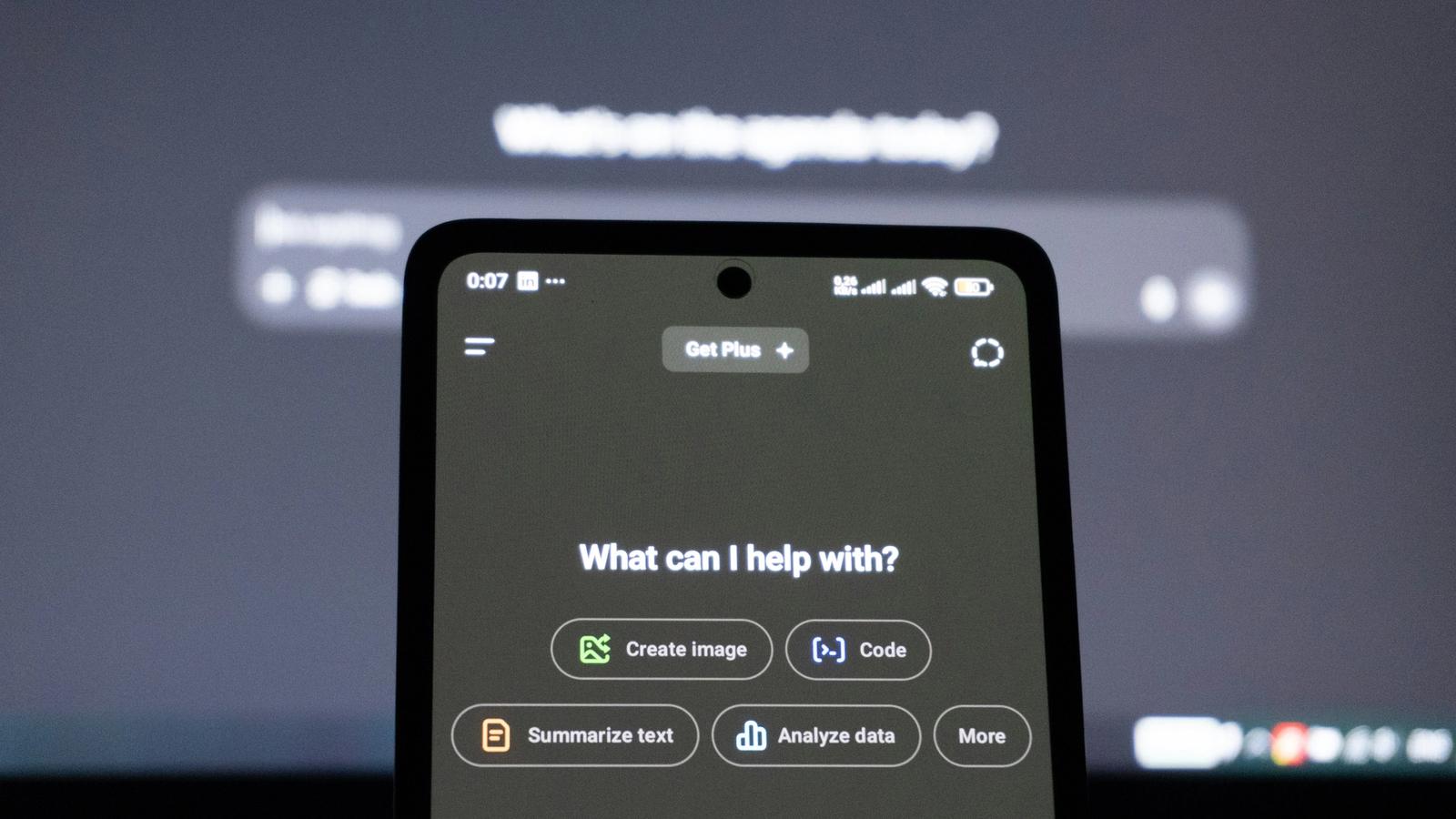
As they digitize their operations and customer care, many mid-sized companies find themselves evaluating automation tools for their phone channel. Within the category of voice solutions, however, there is a common misconception that can undermine the return on investment. A basic phone assistant (a bot or a standard automated answering system) is often confused with a true enterprise AI voice agent.
This confusion is fueled by market messaging that labels as "intelligent" any system capable of playing a synthetic voice or recognizing a handful of keywords spoken by the caller. For a Chief Operating Officer or an Innovation Manager, understanding the technical and functional gap between these two architectures is essential to avoid deploying a partial tool, one destined to become yet another technology silo disconnected from business processes.
The operational limits of a basic phone assistant
A traditional phone assistant, even when it uses speech recognition, operates on a mostly informational and linear logic. Its main job is limited to collecting basic data (such as the caller's name or an ID code), checking the request within an extremely narrow scope, and reciting a preset answer or a static text pulled from a knowledge base.
If the request strays even slightly off the expected path, or requires an actual action on company systems, the basic assistant stops. It cannot change the status of a case, it cannot update a logistics database, and it lacks the flexibility to handle a complex conversation in natural language. The typical output of this tool is an automatic transfer of the call to a human agent or a standard email sent to an internal department. In practice, a basic phone assistant behaves like an advanced filter or a glorified voicemail: it gathers information but leaves all of the actual work on the shoulders of the company's staff.
The agentic approach: evolving toward autonomous execution
An enterprise AI voice agent like Helia represents a generational leap because it shifts the focus from simple interaction to complete execution of the task. The difference is not in the quality of the voice, but in the ability to reason and act bidirectionally, fully autonomously. The architecture of an advanced agent is natively transactional.
When the phone rings, the AI immediately understands the caller's intent, extracts the context, and runs a real-time cross-check against the company's technology stack, such as SAP, Salesforce, HubSpot, or Microsoft Dynamics. The agent recognizes the customer from their phone number, retrieves their history and, if the request involves opening a technical ticket, changing a logistics order, or retrieving billing data, for example, it performs the action directly in the ERP during the call itself. Data is written and validated instantly in the right fields of the company CRM, permanently eliminating the downtime and error margins typical of manual post-call data entry.
Process integration and context management
Another sharp dividing line concerns context management and historical memory. A basic assistant treats every call as an isolated, independent event. If a partner or a team member calls back a few minutes later to add a detail, they have to repeat the entire procedure from scratch.
An AI voice agent, by contrast, relies on deep conversational memory. If a user calls back, the system recognizes the returning caller, identifies the case that is still open, and picks up the conversation exactly where it left off. This level of fluidity is only possible thanks to an onboarding phase dedicated entirely to mapping the client's business processes. Our team works to align the AI with the company's specific operating logic, making sure the tool knows exactly where to find company information so it can answer precisely and based on verified data, whether it is speaking with external customers or with team members and supply chain partners.
A strategic choice for operations
Choosing an agentic infrastructure over a basic assistant means moving from a defensive model, aimed only at reducing the number of incoming calls, to an enabling model, designed to increase the overall efficiency of workflows. Guaranteeing full availability, around the clock and with no wait times, makes it possible to scale operational volumes without increasing headcount.
Internal staff are freed from the background noise of repetitive, low-value phone calls and can focus exclusively on complex commercial relationships and on operational exceptions where human experience and empathy are irreplaceable. This is not about automating to replace, but about automating to process better, turning the phone channel into a fluid, integrated, and constantly updated data hub.